Mapping Seasonal Fluctuations in Roulette Participation Rates on Licensed Swedish Sites
Bianca Hansen · Nov 6, 2026
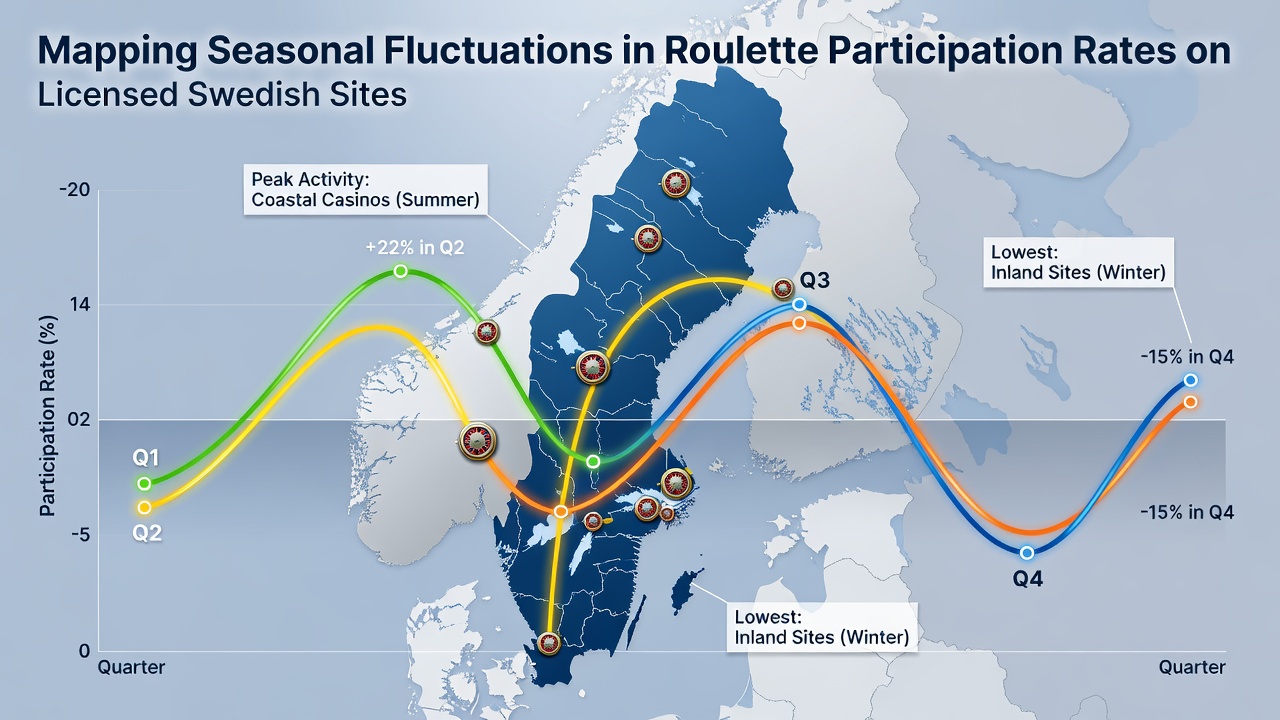
Mapping Seasonal Fluctuations in Roulette Participation Rates on Licensed Swedish Sites
Seasonal patterns in roulette participation on licensed Swedish sites emerge from aggregated data collected across multiple operators regulated by national authorities, and these patterns show consistent shifts tied to calendar months rather than random variation. Observers note that participation climbs during periods of colder weather and reduced outdoor activity while it declines when daylight hours lengthen and leisure options expand beyond screens.
Data Sources and Tracking Approaches
Researchers compile participation metrics from transaction logs submitted to Spelinspektionen, which oversees all licensed operators and requires regular reporting on player activity across game types. These logs capture wager volumes, session durations, and unique account interactions specific to roulette variants, allowing analysts to isolate fluctuations without conflating them with other casino offerings. Cross-referencing with weather records and public holiday calendars further refines the mapping process, since both environmental and cultural factors correlate with changes in online engagement.
Studies covering 2023 through late 2025 reveal that December consistently registers the highest roulette activity levels, driven by extended indoor time and holiday-related downtime, whereas July marks the annual low point as many residents pursue outdoor pursuits. November 2026 data, still preliminary at the time of compilation, already indicates an uptick aligning with the prior three-year average for that month, suggesting the pattern persists into the coming winter cycle.
Observed Monthly Variations
January through March maintains elevated participation because lingering winter conditions keep users indoors, and figures from licensed platforms show a steady plateau rather than sharp spikes or drops. April brings a gradual decline as spring arrives and daylight extends, reducing average session lengths by measurable margins across the operator sample. Summer months from May to August exhibit the steepest reductions, with roulette volumes falling between 18 and 27 percent compared with winter baselines according to aggregated operator submissions.
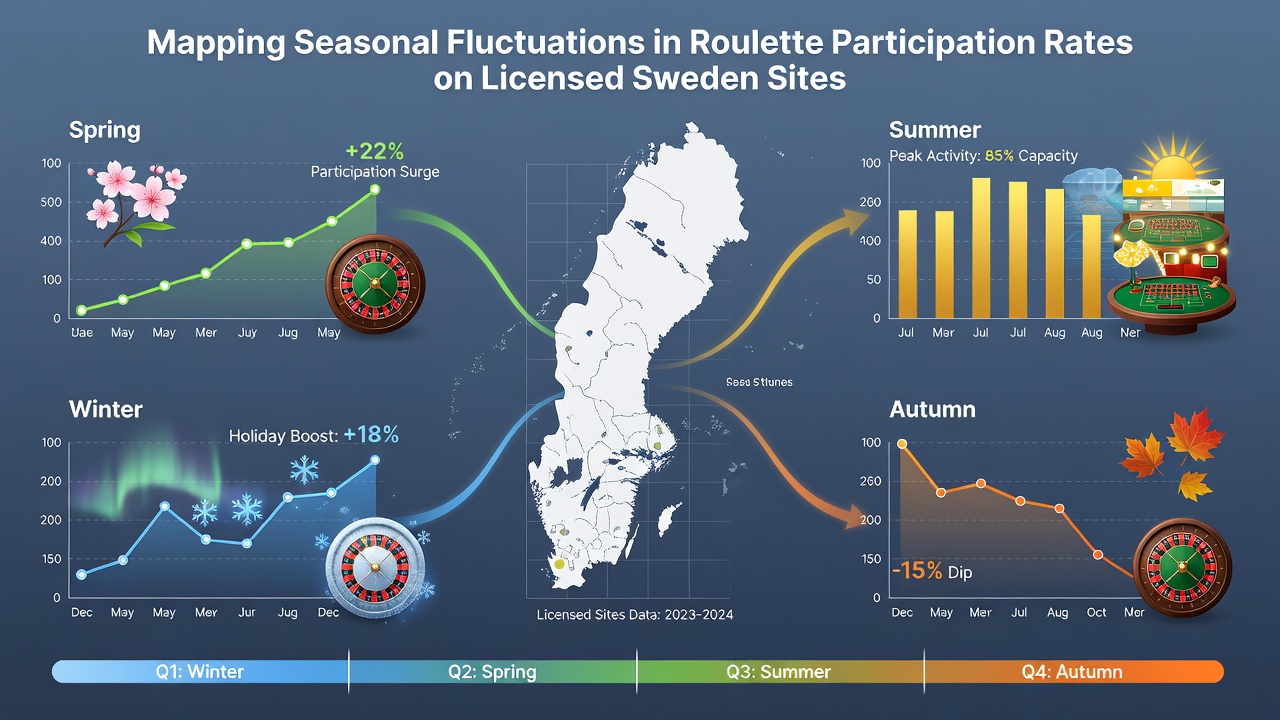
September and October reverse the downward trend as routines return after summer breaks and cooler evenings prompt renewed screen time. The transition remains smooth rather than abrupt, because many players maintain smaller but regular roulette sessions year-round even as overall volumes adjust seasonally. Those who track these metrics note that the amplitude of fluctuation stays within predictable bounds across different roulette formats, including both RNG and live dealer options available on licensed domains.
Influencing Factors Beyond Weather
Public holidays exert additional pressure on the baseline seasonal curve, with Christmas and New Year periods amplifying December peaks while Midsummer celebrations in June accelerate the summer dip. Marketing campaigns timed to these events further modulate participation, although licensed operators must adhere to strict responsible gaming rules that limit aggressive promotion tactics. Economic indicators such as disposable income reports also enter the analysis, yet data indicates that seasonal rhythms override modest income variations in shaping roulette engagement on regulated sites.
Technological factors, including updates to mobile platforms and payment integrations, appear to exert steady rather than seasonal influence, because adoption rates remain consistent across months once new features launch. This stability allows analysts to isolate environmental and cultural drivers more cleanly when mapping participation rates.
Regulatory Context and Reporting Standards
Spelinspektionen mandates transparent reporting that enables external researchers to examine seasonal trends without accessing individual player data, preserving privacy while supporting aggregate studies. Spelinspektionen guidelines require operators to categorize activity by game type, which facilitates precise tracking of roulette-specific movements separate from slots or table games. European-level oversight through bodies such as the European Gaming and Betting Association provides comparative context, showing that Swedish patterns align closely with other Nordic markets while differing from southern European trends where climate effects invert the seasonal curve.
Conclusion
Mapping seasonal fluctuations supplies operators and regulators with actionable timelines for resource allocation and compliance monitoring, because predictable cycles allow proactive adjustments in server capacity and support staffing. Continued collection through November 2026 and beyond will test whether established rhythms hold under evolving player demographics and technological shifts, yet current evidence points to stable, recurring patterns rather than random or declining engagement overall.